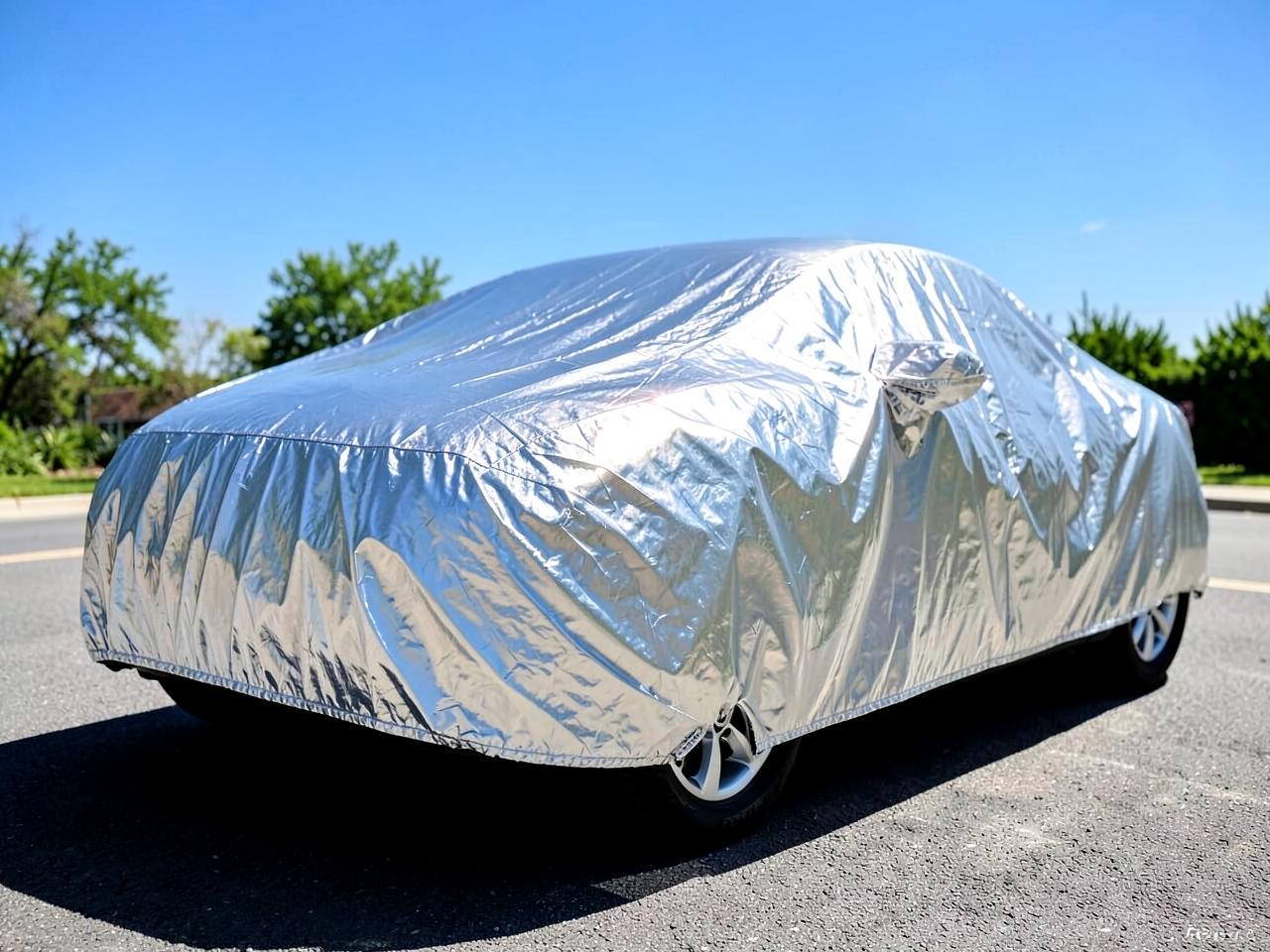
Built for relentless sun
DailySun Reflect UV Car Cover
Four-layer cover with a reflective outer face that pushes solar gain away from the paint, glass and cabin.
- Layers
- 4
- From
- £99.99
Heat and ultraviolet
In hot climates the damage is not rain. It is ultraviolet fading lacquer, heat cracking a dashboard, and trim and rubber perishing years earlier than they should. A sun cover is a reflector first and a cover second.
A reflective outer face turns most solar gain away before it becomes heat. Whatever does get through has to be able to leave, which is why ventilated side panels matter — a sealed cover in direct sun can end up hotter underneath than the bare car.
Unstabilised polyester chalks: the surface goes powdery, the fabric stiffens, and the hem elastic perishes. If a cover has degraded like that it is no longer protecting anything — it is an abrasive sheet lying on your paint.
Never fit a cover to a car that has just been driven in strong sun; let the panels cool first, and use a cover with a soft inner face so the fabric is not dragged across hot, soft clearcoat.
Recommended lines
Built for relentless sun
Four-layer cover with a reflective outer face that pushes solar gain away from the paint, glass and cabin.